

Spooky Science: The Weird Side of Nature + Scavenger Hunt
If you want to do some spooky science with your kids this October, you could buy dry ice, make bubbling potions, and turn your kitchen into a temporary science lab. I’ve done it – more than once, (and it’s really a lot of fun)! But you could also just go outside. Nature has already done a pretty impressive job of making things weird.
There are mushrooms growing out of decaying logs, spiders quietly building elaborate webs, insects that look like leaves, and animals that spend their nights doing things we rarely get to see. There are strange seed pods, things that camouflage themselves almost perfectly, and entire worlds of fungi and microorganisms doing their work beneath our feet.
As my kids got older, I’ve found that I love this kind of science just as much as the big, messy experiments – maybe even more, because it’s a lot less prep! So this month, instead of giving you another list of Halloween crafts and science experiments, let’s head outside for a spooky science nature scavenger hunt and see what weird and wonderful things we can find.
Go Outside and Look for the Weird Stuff
Ready to get started? Here’s the easiest science lesson plan you’ll ever have: Go outside and look around! Encourage your kids to notice the things they might normally walk right past. Stop, poke around (carefully!), take pictures, and ask questions. That’s it!
You really don’t need much for a nature walk, but I do have a few things I almost always bring along. If you’re curious about what’s in my bag, check out 12 Things I Always Carry on a Nature Walk.
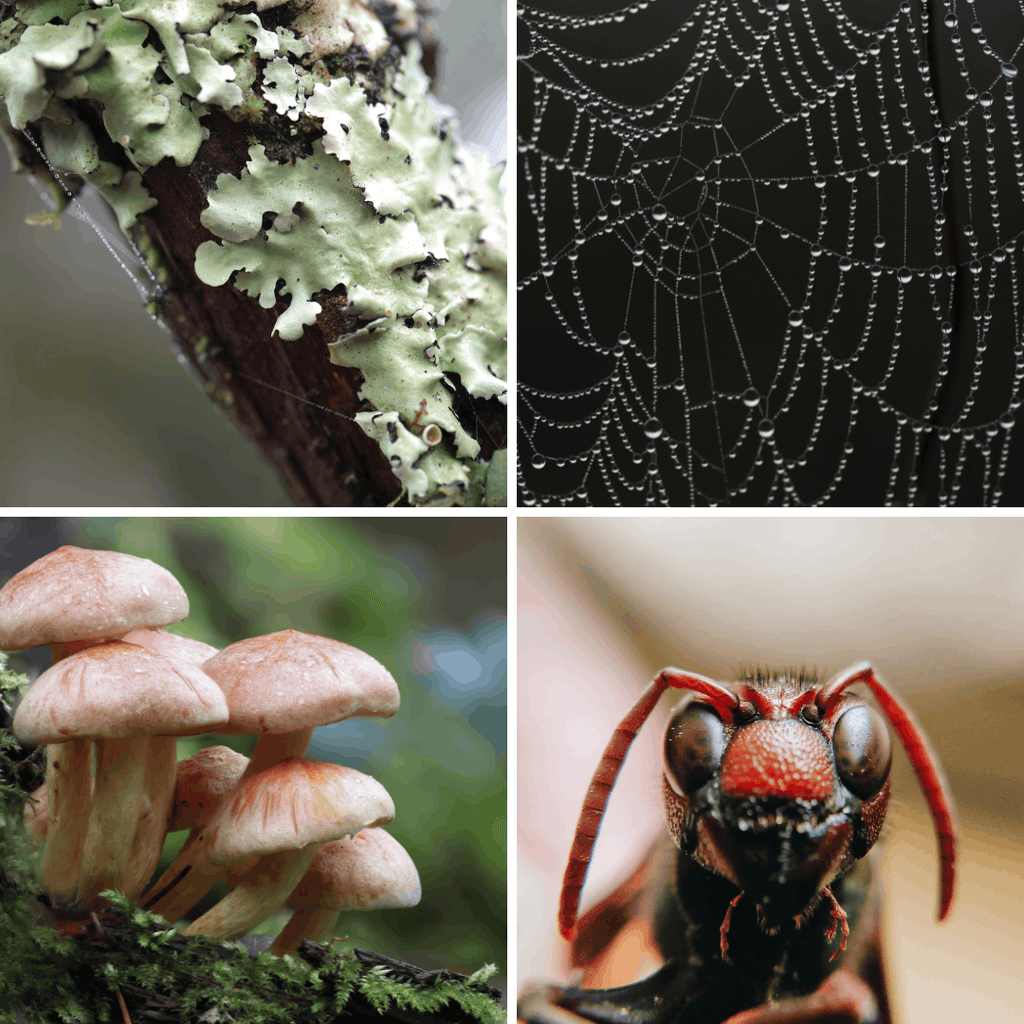
The Spooky Science Nature Hunt
Here’s your mission: head outside and see how many of these you can find! You can even grab the free printable at the end of this post to take the hunt along with you.
- Something decomposing
- A fungus growing on something
- A spiderweb
- Evidence that an animal has been nearby—even if you never see the animal
- Something using camouflage
- A strange seed, pod, or fruit
- An insect you can’t immediately identify
- Something that looks dead but is actually alive
- Evidence of something that happens at night
- A plant with an interesting defense
- Something you’ve never noticed before
Found something interesting? Great! But don’t stop there. Don’t just find it. Figure it out. Take a photo and look it up when you get home. What do you think you’re seeing? What questions does it raise?
One of our favorite tools for this is the Seek app from iNaturalist. You can use your phone’s camera to help identify plants, insects, fungi, and other organisms you encounter outside.
Every walk doesn’t have to be a formal science lesson. Sometimes it’s enough to notice something strange, snap a picture, then let curiosity take over.
If you have younger children along for the walk, let them hunt, too. They may be perfectly happy collecting things while your older kids become the science investigators. The best part is that everyone can be outside doing the same thing, even if they’re not doing it at the same level.
What Makes It Spooky? The Science Behind the Weird Stuff
Once you’ve found something interesting, let your kids follow the rabbit trail.
Found a rotting log? Take a closer look at what’s living in it and talk about decomposition and the important job of fungi, insects, and other decomposers.
Found a spiderweb? Wonder how the spider made it, what kind of web it is, and how it uses that web to survive.
Spotted an insect that seems to blend with a leaf or a tree? That’s a great opportunity to talk about camouflage, mimicry, and adaptations.
Head outside after dark and see what changes when the sun goes down. What can you hear? What animals might be moving around that you never see during the day?
The point isn’t to turn your nature walk into a science lesson. It’s to notice something interesting enough to make you ask, “Why does that happen?” That’s where the real learning takes place!
Don’t Just Find It. Investigate It.
There is so much weird, fascinating, slightly creepy science happening all around us.
This is not a paid advertisement, but I use my Seek app all the time. I love it! If I notice something I’ve never seen before—a strange fungus, an interesting bug, or a weird plant—I want to know what it is. I’ll take a picture, let Seek help me identify it, and then inevitably start looking up more about it.
One time, I found this weird, slimy blob outside and had absolutely no idea what I was looking at. Seek helped me identify it as Nostoc, a type of cyanobacteria sometimes called star jelly or witch’s jelly. (And yes, it really does look like some kind of alien goo!)
What was it? Why was it there? How did it get there? Why does it look like that? Suddenly, you’ve learned something you didn’t know five minutes ago. That’s the kind of science I love, and you don’t need a worksheet for that!
We don’t always need a complicated experiment, a perfectly planned lesson, or a table full of supplies. Sometimes we just need to go outside and pay attention.
Proof That They Keep Noticing
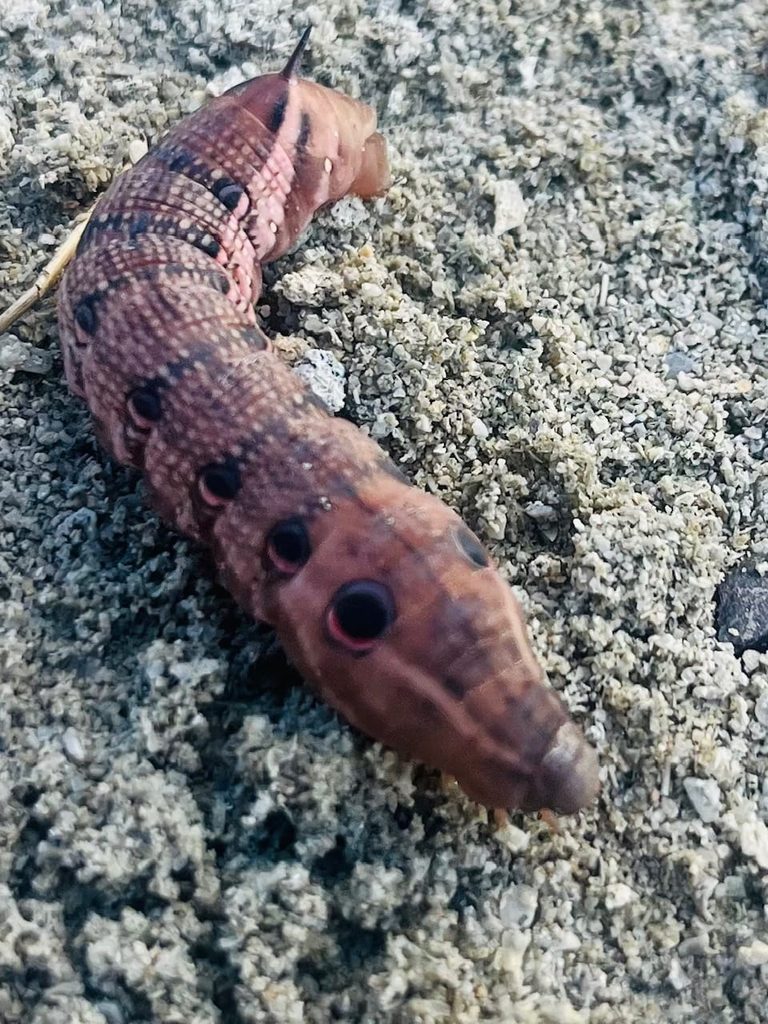
Just the other day, my son (our homeschool grad) sent me a picture of a Tersa sphinx moth caterpillar he’d spotted. My first thought was, “That’s so cool!” followed by, “What on earth is that?!” Really, I was more thrilled that he noticed something unusual and wanted to share it with me. The curiosity sticks around—even after graduation, and I consider that a definite homeschool-mom win!
So grab your kids, take a walk, and see what you can find. And if you find something really weird, I want to know about it!
Want to take the hunt with you? I’ve made a free, one-page Spooky Science Nature Hunt you can print and bring along on your next nature walk. It includes a list of things to look for, plus space to jot down what you find and what you’re curious to learn more about.
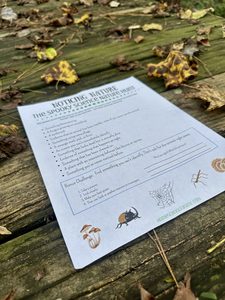
You can find it in the Freebies section of my blog under Let’s Play Outside. While you’re there, take a look around! You’ll find more nature scavenger hunts and other fun printables to help you and your kids explore the great outdoors.
Remember, you don’t need an elaborate experiment or a perfectly planned science lesson to spark curiosity. Sometimes, all it takes is a walk outside and something strange growing on a log.
You never know what you’ll discover when you take the time to notice.






Love this!!