


Homeschool Schedules Explained: Traditional, Sabbath, Year-Round & More
Homeschooling gives families incredible freedom — but with freedom comes the challenge of creating a homeschool schedule that actually works. That flexibility is a gift, but it can also feel overwhelming if you’re not sure where to start. Scheduling is one of my biggest struggles, and something I was always tweaking for a good part of our homeschooling journey.
The good news? There’s no one-size-fits-all homeschool schedule. Some families thrive on structure, while others flourish with a more relaxed approach. From traditional school-at-home routines to Sabbath schooling cycles (I’ve tried them all!), this post will show you different homeschool schedules to try. You just might find the rhythm that keeps your kids learning — and your family thriving!
This post contains affiliate links. Please see my disclosure page for more information.
Why Scheduling Matters
Flexibility is one of homeschooling’s best perks, but without some structure, flexibility can quickly turn into, “Oh no, did we actually do math this week?” A schedule doesn’t have to be a rigid 8 a.m. bell and color-coded chart (unless that makes you happy). You just need a rhythm that keeps your learning lifestyle from turning into pajamas-all-day chaos.
A homeschool schedule gives you freedom with boundaries, keeps the chaos in check, helps kids know what to expect, and creates space for balance – because there is much more to homeschooling than just the academics.
Let’s look at some of the most popular homeschool schedules. Each one has its own strengths, and you may find that different seasons of life call for different approaches.
Traditional School-at-Home Schedule
This option mirrors a typical public or private school day. Kids move through core subjects at set times, often starting in the morning and finishing in the afternoon.
- Pros: Familiar structure, predictability, smooth transition for new homeschoolers.
- Cons: Can feel rigid, and there’s not much wiggle room when life throws a curveball.
- My Take: I began with this schedule (because it was all I knew), and while it helped create consistency, I learned that a little flexibility made things far more enjoyable for everyone.
Block Scheduling
Instead of doing every subject every day, you focus on fewer subjects in longer blocks of time. For example: Math and Science on Monday/Wednesday, Language Arts and History on Tuesday/Thursday.
- Pros: Encourages deeper focus, minimizes the brain-jump from algebra to literature in the same hour.
- Cons: Requires planning to make sure everything gets covered (and it’s easy to lose track if you skip history too many Tuesdays in a row).
- My Take: What I love about block scheduling is the breathing room — more depth, more focus, and no frantic “hurry up, we’ve got history in five minutes!” Especially in the middle and high school years, blocking made a huge difference. Now that I’m a newly retired homeschool mom, I’ve recently started block scheduling my own life… turns out, it works for grown-ups too!
Loop Scheduling
Rather than assigning subjects to fixed days, you rotate through a list. For example: If you don’t get to science today, it simply moves to the top of tomorrow’s list.
- Pros: Nothing is permanently skipped, there’s flexibility, and a great way to not feel “behind.”
- Cons: The day-to-day routine is less predictable — which can be a challenge if your kids thrive on knowing exactly what’s coming next.
- My Take: I mainly used a loop schedule for my version of a morning basket, or electives. It was a great way to make sure we eventually got to everything, but it didn’t quite give us the structure we needed overall for everything.
Four-Day Week
Families work through lessons in four days, leaving one day open for co-ops, field trips, appointments, or needed rest.
- Pros: Extra breathing room, time for enrichment activities, and a built-in long weekend.
- Cons: Squeezing five days of work into four can feel like cramming for finals if you’re not careful.
- My Take: The four-day week worked really well when we were in co-op, and other seasons of life that were busier than others. We didn’t feel the stress of cramming in a full workload on days we were out of the house. At other times, that “free day” often became the perfect time for field trips or catching up.
Sabbath Schooling
This rhythm follows a cycle: six weeks of focused learning, then one week off before starting again.
- Pros: Prevents burnout, provides consistent breaks, and helps you look forward to those “off” weeks. Great for those who like structure but also need regular chances to breathe.
- Cons: Needs advance planning, and the calendar may not always match up with major holidays that you may typically take several days off for.
- My Take: Sabbath Schooling gave us a much-needed built-in reset. That week off was perfect for catching up on home projects, resting and regrouping, or sneaking in a mini-vacation. I’ll admit, working hard for six straight weeks without a break could be tough — and sometimes holidays turned into school days — but that week off at the end made it all worth it.
Year-Round Homeschooling
Instead of a long summer break, learning continues year-round with shorter breaks sprinkled throughout.
- Pros: Less review needed (no more “summer slide”), and freedom to take breaks when your family actually needs them.
- Cons: It can sometimes feel like there’s never a true break. And if you live in a neighborhood where most kids attend traditional schools, it may feel a little “unfair” to your own children, who might not understand why they’re stuck inside doing math in July.
- My Take: Year-round homeschooling wasn’t our style, though I see both sides of it. Personally, I needed that long summer break — and I know the kids did too.
Unschooling/Interest Led
Here, children’s interests guide the flow of learning. Families might spend a week or more diving into astronomy or cooking, then shift to another passion.
- Pros: Highly engaging, and can turn everyday life into a classroom.
- Cons: Possible missed learning opportunities, lack of structure, and not all children are suited for completely self-directed learning.
- My Take: Structure and guidance are important pillars in a child’s life, and this approach sometimes falls short in those areas. My feelings about it have softened over time, but I still believe it’s not the right choice for every family.
Hybrid / Co-op Schedules
Several families combine at-home lessons with group classes, online courses, or co-ops.
- Pros: Adds socialization, variety, and outside expertise (sometimes it’s nice when someone else teaches algebra!).
- Cons: Less flexibility since you’re on someone else’s timetable.
- My Take: We only attended co-op for a few years during our homeschool journey. My kids got to learn from other adults, meet new people, and I got a little break from being the teacher for every subject. Some years, it just didn’t work with our schedule, or the kids were simply not interested.
Tips for Choosing the Right Schedule
The beauty of homeschooling is that there’s no single “right” way to schedule your days. Consider your family’s daily rhythms, work commitments, and children’s learning styles, and be open to experimenting — what works this year may not next. Keep in mind that your homeschool schedule should serve your family, not the other way around.
A schedule can be made without having a final plan in place for subjects of study. Check out my 10 Tips for Choosing Homeschool Curriculum if you are still planning.
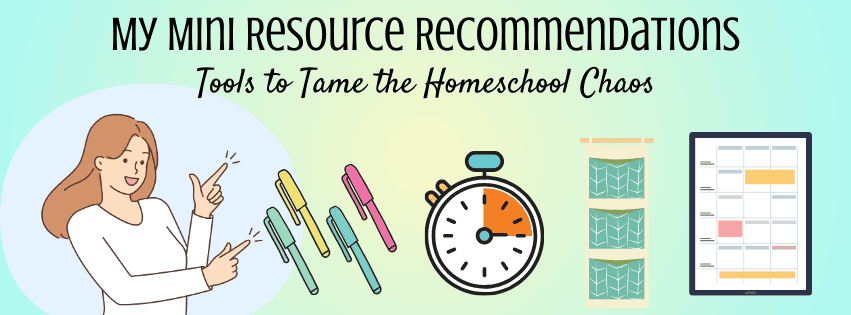
- Timers – A lifesaver for block or loop schedules.
- Pocket Chart – Perfect for visual learners (young or old).
- Digital Calendar – A cool all-in-one hub for lessons, chores, meal planning, and more. It is on my wish list!
Every family finds their own rhythm, and I’d love to hear yours! Tell me in the comments what works for you — your experience might be the encouragement someone else needs today!





Great explanation and I love how you give pros and cons. Super helpful post!
Thank you! The freedom of scheduling for what works for your family is such a benefit for the student(s) and the teacher!