The Lost Art of Summer Boredom
What we lost when summer became scheduled — and how to bring some of it back
This post contains affiliate links. Please see my disclosure page for more information.
Why Kids Don’t Need Constant Entertainment During Summer
I’m just going to say it: Kids do not need to be professionally entertained all summer long.
Somewhere along the way, parents started feeling responsible for turning summer into a perfectly curated mix of camps, enrichment activities, screen-time negotiations, educational opportunities, memory-making experiences, and expensive outings.
And honestly, I think we accidentally lost some of the best parts of childhood in the process.
Because if you grew up in the 80s or early 90s, you probably remember a very different kind of summer: bike rides, sprinklers, library books, grandparents, dirty feet, and being told to come home when the streetlights came on.
We were bored sometimes – and that was actually good for us. Nobody thought boredom was some kind of parenting failure.

Why Boredom Is Actually Good for Kids
I’m not pretending we all need to throw our iPhones into the yard and raise children like it’s 1986. (Although that’s not a terrible thought).
But I do think many kids have lost the ability to move through boredom because the second they feel uncomfortable, we hand them a glowing rectangle and act like the problem is solved.
Back then, boredom wasn’t treated like an emergency. It was just part of summer.
You complained for a minute. Your mom told you to go outside anyway. And eventually, you figured something out. That’s the part I think we underestimate now.
Because boredom used to lead somewhere.
It led to creativity. To problem-solving. To imagination. To independence.
Why Slower Summers Matter for Kids
When my own kids were 10 (which was around 10 years ago), I remember looking around and noticing childhood was changing. Many of our friends and neighbors were constantly moving from camp to camp, activity to activity, with the newest electronics always within reach. And honestly, I didn’t want any part of it for our kids.
We were all getting the same message:
keep them busy,
keep them learning,
keep them entertained,
keep them ahead.
But looking back, I can say we gave our kids a pretty ordinary summer.
They spent time outside. They stayed with grandparents.
They read books we picked up at the library. They built random projects. They got dirty. They learned how to help around the house.
And yes — sometimes they were probably bored.
I think those slower summers gave them two things a lot of kids are missing now: space and boredom. And modern parenting is robbing us of that – if we allow it.
A Simple Summer Routine for Kids (Without Overscheduling)
Now to be clear — I’m not arguing for total chaos all summer either. I actually think kids do better with some structure and responsibility, so I gave our kids a little structure and even more freedom. Our summers consisted of a few responsibilities, a tad of hands-on learning, some reading, and then freedom for the rest of the day. That’s enough.
As a homeschool mom, we took a full break from formal school during the summer, but I always kept plenty of open-ended activities available. Sometimes kids just need a starting point.
Not another expensive camp.
Not a parent acting as cruise director all summer long.
Not a screen shoved in front of them every time they sigh dramatically and announce they’re bored.
Summer Activities for Kids That Doesn’t Feel Like School
One thing that works surprisingly well for both younger kids and teens is creating a simple summer activity jar at the beginning of the season.
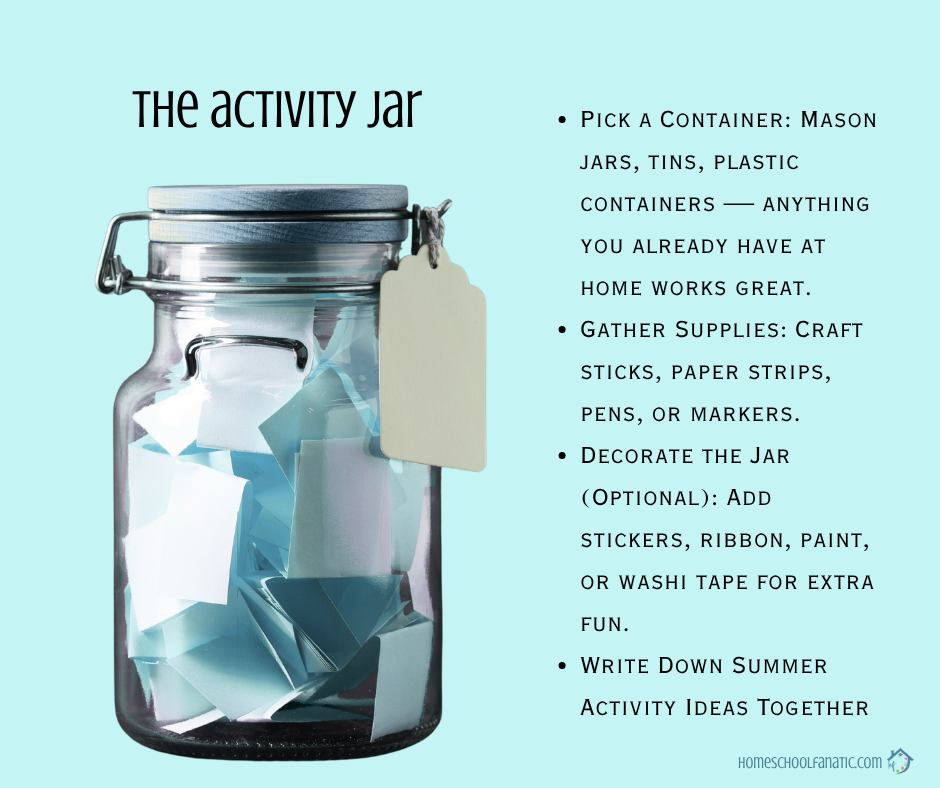
Rather than coming up with all the ideas, I’d ask the kids to write down some things they would like to do this summer. Whether it’s little things, or big things – write it down. The best part is that kids feel some ownership over the summer instead of waiting to be constantly entertained.
Then toss the ideas into a jar and pull one whenever you hear:
“There’s nothing to do.” There will be plenty of things to choose from the jar. Most can be done with little to no prep, but if they pull something bigger — like a day trip — try to make it happen sometime that week.
Another activity jar bonus, is that the same idea can be used with chores/projects! Putting things in the jar that are not part of daily routines – things like cleaning windows and blinds, cleaning out a playroom or closet, even redecorating their room is fantastic to do in the summer!
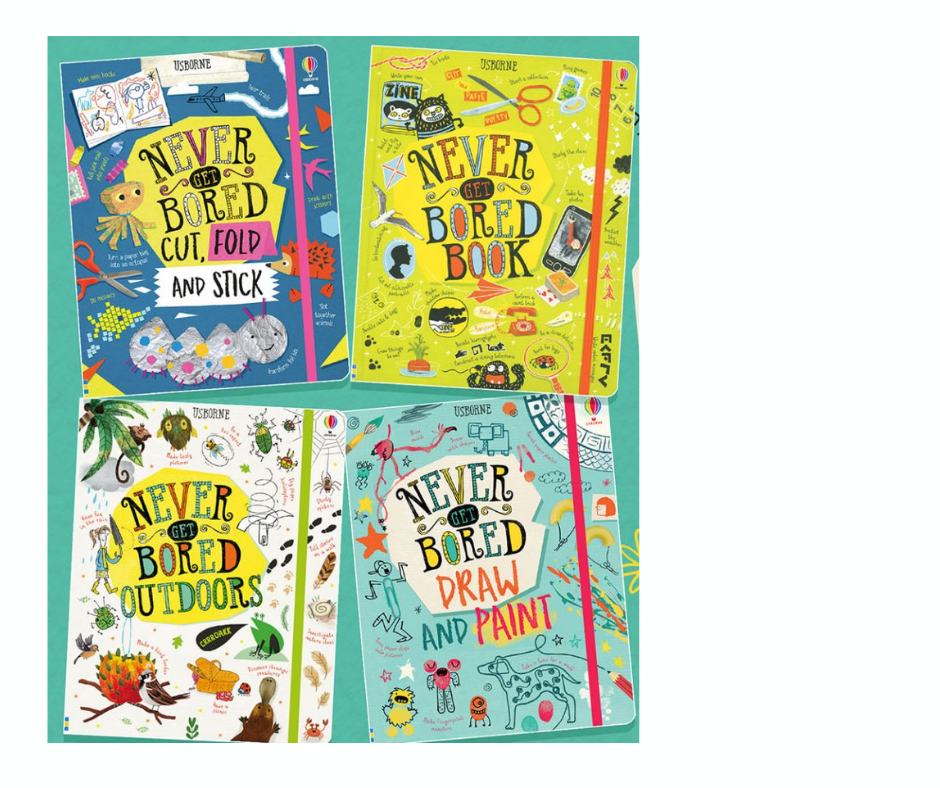
If you’re still coming up short on ideas, check out the Never Bored books! Whether it’s a rainy afternoon or a long summer’s day, you’ll never get bored with these books. They are some of my absolute favorites, and I highly recommend them!
Even more ideas! Keep your summer organized and full of fun with a free printable featuring every day to celebrate, plus space for your own ideas, resources, and supplies. Delivered straight to your inbox—grab the current month’s printable and start planning today!
Need ideas for tweens and teens too?
“Okay, but what do you do with older kids all summer?”
Honestly, older kids need this kind of slower, less screen-focused summer just as much as the younger ones. Kids this age are incredibly capable, and a little extra spending money can be a great motivator – so use it to your advantage. Rather than you hovering over them, let them own whatever project it is. My kids have painted bedrooms, pressure washed, cut grass, and took on organizing projects all on their own.
I’ve also put together another post with 25 summer ideas for tweens and teens that encourage independence, creativity, and real-world skills without requiring expensive camps or a packed schedule.
You can also grab my free Celebrate Every Day printable for simple daily activities, celebration ideas, and summer fun delivered straight to your inbox.

Bringing Back a Simpler Summer for Kids
The older I get, the more I think more parents are quietly realizing we need to pull back from some of what modern culture has normalized about childhood. It’s not normal to live like that nonstop, going from activity to activity without any freedom to be bored.
Do you remember what it felt like to wake up on a summer morning with absolutely nothing planned? I sure do – and we still ended up making memories that lasted for decades.
I’ll leave you with a line from an old Eddie Money song that perfectly captures this feeling: “I Wanna Go Back.”
I think a lot of us do.
Not because everything was perfect back then — but because childhood had more freedom, more simplicity, and more room to just be a kid.
We can’t go back ourselves. But maybe we can give a little of that childhood back to our kids.