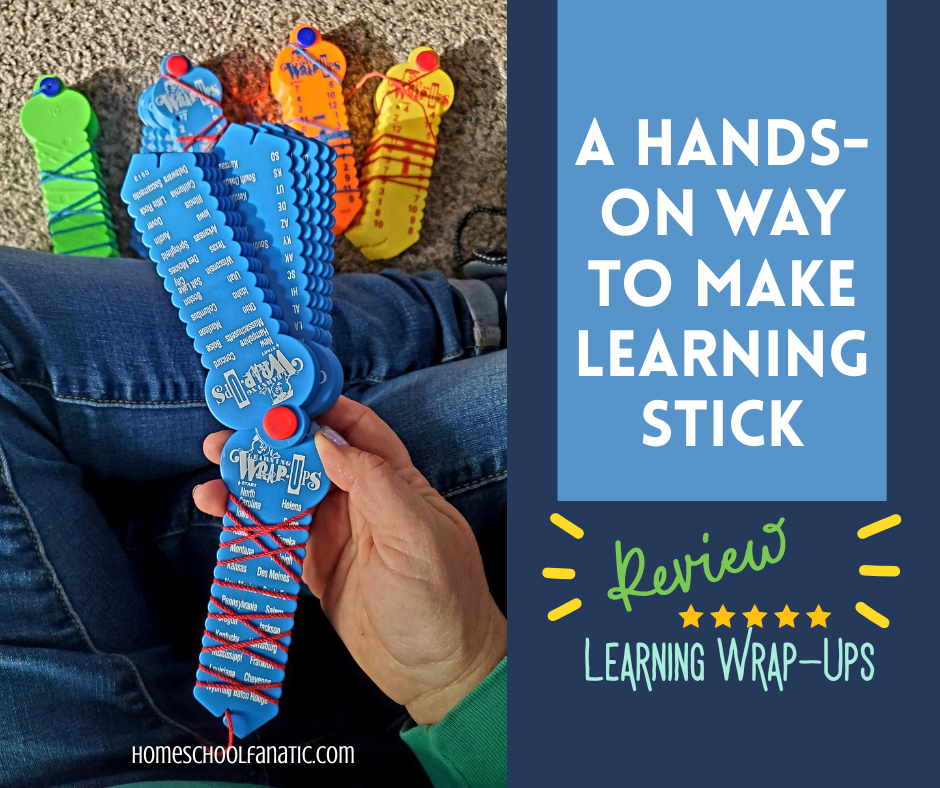
Learning Wrap-ups Review
The year was 1980-something.
My 4th grade teacher sat on a stool with a ticking stopwatch in her hand and a gleam in her eye. One by one, we were called up to the front of the room to recite math facts and times tables under pressure while the whole class waited their turn. It was all speed, accuracy, and trying not to freeze when your brain suddenly forgot something you knew you knew.
If you got them all right, you earned a construction paper Pac-Man that crept across a chart on the wall. Miss even one, and the ghost stayed right there beside your name for everyone to see.
It was memorable—but it’s not exactly how most people want math practice to feel today. As a homeschool mom, I found myself looking for something different: practice that builds confidence, not pressure by performance.
And that’s where tools like Learning Wrap-Ups naturally fit in.
Instead of drills that feel stressful or overwhelming, they turn practice into something hands-on, self-paced, and quietly satisfying. It’s still practice—but it feels completely different.
This post contains affiliate links. Please see my disclosure page for more information.
Are Learning Wrap-Ups Worth It?
If you’re looking for a way to give kids extra practice without pulling out another worksheet, I think Learning Wrap-Ups are worth it. They’re really useful for kids who enjoy hands-on learning, need repetition to build fluency, or are ready to practice independently.
They’re not a curriculum—and I wouldn’t try to make them one. I see them as a simple tool to keep handy when a child needs a little more practice with a skill.
Why I Like Learning Wrap-Ups
What I appreciate most about Learning Wrap-Ups is how simple they are. Kids get hands-on practice, immediate feedback, and the opportunity to work independently without needing another worksheet or a screen.
- They’re especially useful for kids who learn well by doing and benefit from hands-on practice.
- They’re easy to use for independent practice, whether you’re working with another child or just need a few quiet minutes.
- The self-checking design lets kids know right away whether they got the answers right.
- Everything stays together, so there aren’t a bunch of cards or pieces to keep track of.
- And because they’re portable and screen-free, they’re easy to pull out at home, on a road trip, or whenever you have a few minutes to fill.
What Can You Practice With Learning Wrap-Ups?
There are Learning Wrap-Ups for a variety of ages and subjects, from early learning and basic skills to math facts and geography.
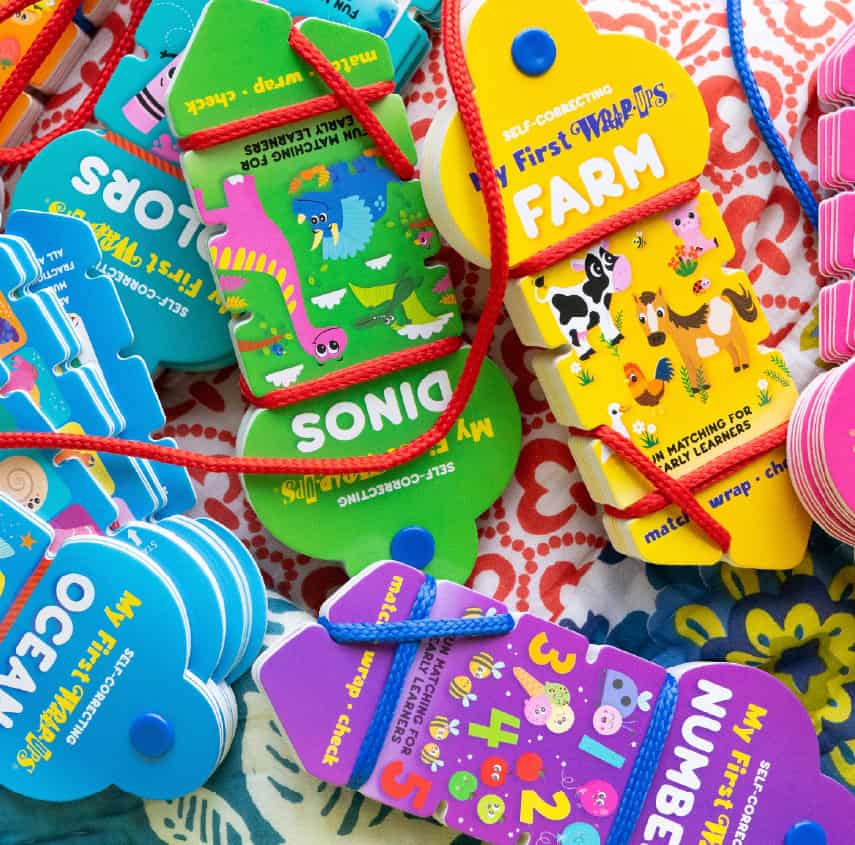
The newer My First Wrap-Ups are designed for younger children, with activities that introduce early reading and math skills while also building hand-eye coordination, problem-solving, and other foundational skills.
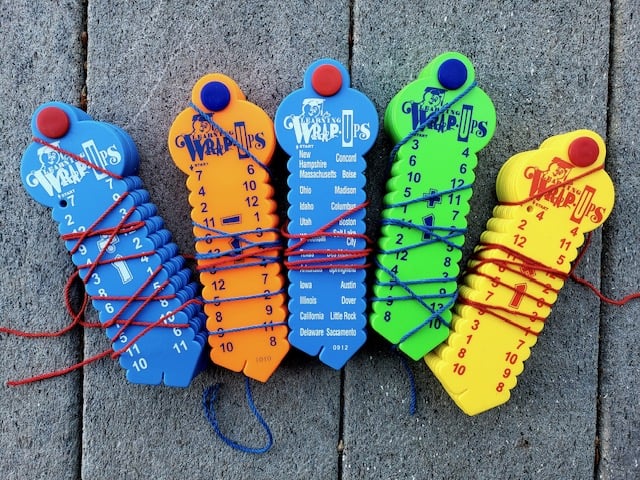
The original Wrap-Ups include options for addition, subtraction, multiplication, division, states and capitals, and more, so you can choose the type of practice that fits your child’s current needs.
For math learners who need more than a few minutes of practice, there are also bundled sets that pair the Wrap-Up boards with a workbook for additional practice and reinforcement. These can be a nice option when you want the hands-on practice of the Wrap-Ups along with a little more structure.
Want to take a look? You can find the Learning Wrap-Ups currently available in my PaperPie shop.
Learning That Fits Into Real Life
The best part is that none of this requires a complicated setup or a full lesson plan.
Learning Wrap-Ups slide easily into everyday routines. They work well as a quick warm-up before math, independent practice while you’re working with another child, or a quiet, screen-free activity during downtime. In many homes, they naturally find their way into morning basket time, or what I prefer to call the lunch crate, where they become an easy, no-prep option for focused skill practice.
They also travel well, making them useful for road trips, waiting rooms, or those in-between moments where you need something simple that still feels productive.
Bonus: if you happen to have a cat, don’t be surprised if the string becomes just as fascinating as the math facts!
How to Use Learning Wrap-Ups
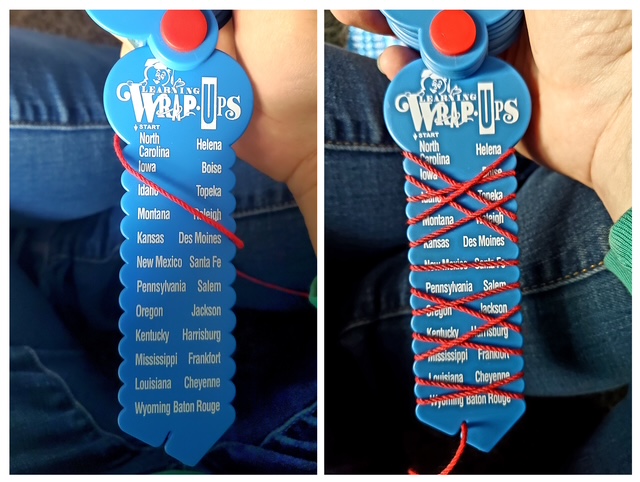
Start at the top of the Wrap-Up board and begin on the left. Find the matching answer on the right side, then wrap the string into the notch beside it. Continue working your way down the board until all problems are complete.
When finished, flip it over—the pattern on the back shows whether the sequence is correct.
That built-in self-check means kids can work independently and know immediately how they did, without waiting for correction or confirmation from you.
My Final Take
Learning Wrap-Ups have been around for decades for a reason. They’re simple. They’re effective. And they meet kids right where they are—without pressure, without screens, and without the overwhelm that sometimes comes with traditional drills.
If you’re looking for a simple way to reinforce skills, encourage independent practice, and give kids a break from worksheets, I’d happily recommend giving Learning Wrap-Ups a try.
You can find all of the Learning Wrap-Ups right here in my PaperPie shop.